What Is a Tarot Deck?
A traditional tarot deck usually consists of 78 cards. These are divided into 22 Major Arcana cards and 56 Minor Arcana cards. The Major Arcana feature well-known archetypal figures and themes such as the Fool, the Magician, the High Priestess, the Hermit, the Wheel of Fortune, Death, the Tower, the Sun and the World.
The Minor Arcana are divided into four suits or elemental groups. Depending on the tarot system, these are commonly known as Wands, Cups, Swords and Pentacles or Coins. Each suit contains numbered cards as well as court cards. Although many decks follow this basic structure, the names, sequence, imagery and interpretation of individual cards can vary considerably.
A tarot deck is therefore much more than a collection of interchangeable pictures. Through colour, figures, symbols, landscapes and composition, every edition presents its own interpretation of traditional tarot themes. Some decks remain closely connected to historical models. Others combine the traditional structure with new philosophical, spiritual or artistic ideas.
This is one of the most important conclusions of any meaningful tarot deck comparison: the structure may be familiar, but the experience created by the artwork can be completely different.
From Historical Playing Cards to Symbolic Worlds
The earliest surviving tarot cards originated in northern Italy during the 15th century. They were elaborately designed playing cards commissioned by wealthy families and were not originally created as tools for divination. The best-known examples include the Visconti and Visconti-Sforza cards, which were decorated with gold leaf, expensive pigments and figures from aristocratic court life.
Over the following centuries, tarot developed in different regions of Europe. Printed card decks made the images available to a wider audience. In France, a recognisable visual tradition emerged that is now generally known as the Tarot de Marseille.
Only much later did tarot cards become increasingly associated with esoteric teachings, philosophical systems and methods of interpretation. During the 19th and early 20th centuries, new tarot systems combined older imagery with astrology, Kabbalah, alchemy and psychological ideas.
Tarot is therefore simultaneously part of the history of playing cards, European cultural history, symbolic thought and visual art. Modern artists continue to engage with its familiar archetypes, transforming their appearance and making them accessible to new generations.
How Can Different Tarot Decks Be Compared?
A useful tarot deck comparison should not focus only on which deck looks the most beautiful. The right choice also depends on experience, purpose and personal perception.
Historical Importance
Historical decks reveal how the visual language of tarot developed over time. They are particularly interesting for collectors, art historians and readers who want to understand traditional imagery.
Visual Language
Some tarot cards communicate their meanings through recognisable scenes involving people, landscapes and actions. Others rely more heavily on geometric forms, abstract symbols or traditional arrangements of suit emblems.
Symbolic Complexity
Some decks are deliberately accessible. Others contain extensive astrological, mythological, kabbalistic or alchemical references. Complex symbolism can be fascinating, but it usually requires more study and background knowledge.
Suitability for Beginners
For beginners, decks with clearly illustrated situations are often helpful. Fully illustrated Minor Arcana cards make it easier to connect a visual scene with a possible meaning.
Artistic Value
Beyond their practical use, tarot cards can be viewed as complete artistic cycles. Composition, colour, painting technique, print quality and originality are particularly important for art lovers and collectors.
Personal Resonance
Ultimately, the immediate emotional and visual response matters. A tarot deck should arouse curiosity and invite repeated observation. A historically important or theoretically suitable deck may still be of limited value if its images create no personal connection.
1. Tarot Deck Comparison: Visconti-Sforza Tarot
The Visconti-Sforza Tarot belongs to one of the oldest surviving tarot traditions. The cards were produced for members of the powerful Visconti and Sforza families in northern Italy. Several related decks survive only in incomplete form and are now held in different museum and private collections.
The cards were painted by hand and decorated with precious materials. Gold backgrounds, courtly clothing and formal figures reflect the social status of their original owners. The deck therefore conveys not only early tarot imagery but also the visual culture of the Italian Renaissance.
Imagery and Symbolism
The figures often appear calm, frontal or arranged within clearly defined courtly scenes. Many images are less dramatic than those found in later tarot decks. Their significance emerges through clothing, posture, attributes and the traditional role of the person represented.
The surviving cards are of exceptional art-historical value. Modern editions intended for practical use often reconstruct the missing cards. These additions may differ depending on the publisher and artistic approach.
Who Is the Visconti-Sforza Tarot Best For?
- Lovers of Renaissance art and historical imagery.
- Collectors of significant tarot reproductions.
- Readers who want to explore the early roots of tarot.
- Experienced users who are comfortable with less narrative imagery.
Strengths and Limitations
Its greatest strength is its historical and artistic significance. As a first deck for beginners, however, the Visconti-Sforza Tarot is only partly suitable. The Minor Arcana generally do not present fully developed narrative scenes, and the original decks have not survived in complete form.
2. Tarot Deck Comparison: Tarot de Marseille
The Tarot de Marseille is not a single deck created by one specific artist. The name refers to a family of related tarot editions characterised by recognisable figures, colours and compositions. Important historical versions were printed in France and neighbouring regions.
One of the best-known editions is the 18th-century tarot produced by cardmaker Nicolas Conver. Its imagery influenced many later reproductions and reconstructions of the Marseille tradition.
Visual Language and Structure
The Major Arcana feature strong outlines, limited colour palettes and distinctive figures. Although the artwork may appear simple to modern viewers, it follows a carefully developed visual order. Directions of gaze, hand gestures, objects and colour fields all play a role in interpretation.
The numbered Minor Arcana cards usually do not feature narrative scenes. Instead, Swords, Wands, Cups and Coins are arranged in ornamental patterns. Readers working with this system place greater emphasis on number symbolism, elements, card position and traditional correspondences.
Who Is the Tarot de Marseille Best For?
- People interested in traditional European tarot art.
- Readers who enjoy exploring numbers, symmetry and elemental structures.
- Collectors of historical card designs.
- Experienced readers who do not require fully illustrated numbered cards.
Is the Tarot de Marseille Suitable for Beginners?
Beginners can certainly learn with the Tarot de Marseille, but a good introduction is usually helpful. The Major Arcana are distinctive and easy to recognise. The Minor Arcana, however, provide fewer immediate narrative scenes than the Rider-Waite-Smith Tarot. Beginners must therefore work more directly with numbers, colours, suits and basic symbolic principles.
3. Tarot Deck Comparison: Rider-Waite-Smith – The Modern Classic
The Rider-Waite-Smith Tarot is one of the most influential tarot decks in the world. It was developed according to the ideas of Arthur Edward Waite and illustrated by the artist Pamela Colman Smith. The original edition was published by Rider in the early 20th century.
The name Rider-Waite-Smith is now increasingly used to acknowledge Pamela Colman Smith as the artist whose visual imagination played a decisive role in the deck’s impact and lasting success.
Why Was This Tarot Deck So Influential?
One of its most important innovations was the use of fully illustrated numbered cards in the Minor Arcana. Instead of showing only a specific number of Cups, Swords, Wands or Pentacles, the cards depict people, situations and emotional states.
Readers can therefore begin to understand a card by looking at the image itself. A figure may look back, carry a heavy burden, celebrate with others or contemplate a distant landscape. This narrative quality supports intuitive interpretation and made the deck a foundation for countless later tarot designs.
Visual Language and Symbolism
The illustrations are clear and comparatively accessible. At the same time, they contain numerous references to Western esotericism, astrology, religious imagery and symbolic uses of colour. The deck can therefore be read on both a straightforward and a more advanced level.
Who Is the Rider-Waite-Smith Tarot Best For?
- Beginners who want to learn tarot systematically.
- Readers who prefer recognisable visual scenes.
- People who appreciate a large selection of books and learning resources.
- Experienced readers who want to study familiar symbols in greater depth.
Strengths and Limitations
The Rider-Waite-Smith Tarot is accessible, versatile and exceptionally well documented. Its widespread popularity may also mean that some readers find its imagery too familiar or insufficiently individual. Art lovers seeking a more painterly, modern or visionary style may prefer another deck.
4. Tarot Deck Comparison: Thoth Tarot – Esoteric Depth and Visionary Art
The Thoth Tarot was conceived by Aleister Crowley and painted by Lady Frieda Harris. Their collaboration continued over several years. The deck combines tarot with astrology, Kabbalah, alchemy, mythology and Crowley’s own philosophical and esoteric system.
Frieda Harris’s artistic achievement is central to the identity of the deck. Her cards combine geometric structures, luminous colours, movement and densely layered symbolism. Many images appear both abstract and spatial.
How Does It Differ from the Rider-Waite-Smith Tarot?
Although both decks emerged from Western esoteric traditions, their visual languages are very different. The Rider-Waite-Smith Tarot often presents recognisable scenes. The Thoth Tarot places greater emphasis on energetic structures, abstract compositions and complex symbolic correspondences.
Certain card names and the ordering of some cards also differ. Readers moving to the Thoth Tarot from another system should therefore avoid transferring every familiar meaning without adjustment.
Who Is the Thoth Tarot Best For?
- People interested in astrology and Kabbalah.
- Experienced tarot readers who want to study a complex system.
- Lovers of visionary and geometric art.
- Collectors of important 20th-century tarot decks.
Is the Thoth Tarot Suitable for Beginners?
A beginner can start with the Thoth Tarot when there is a strong personal connection to the artwork. The learning process is generally more demanding than with the Rider-Waite-Smith system. Its many symbolic layers can be inspiring but also overwhelming. A detailed guidebook and a willingness to study the system are therefore highly recommended.
5. Tarot Deck Comparison: Röhrig Tarot – Fantastic Naturalism and Visionary Symbolism

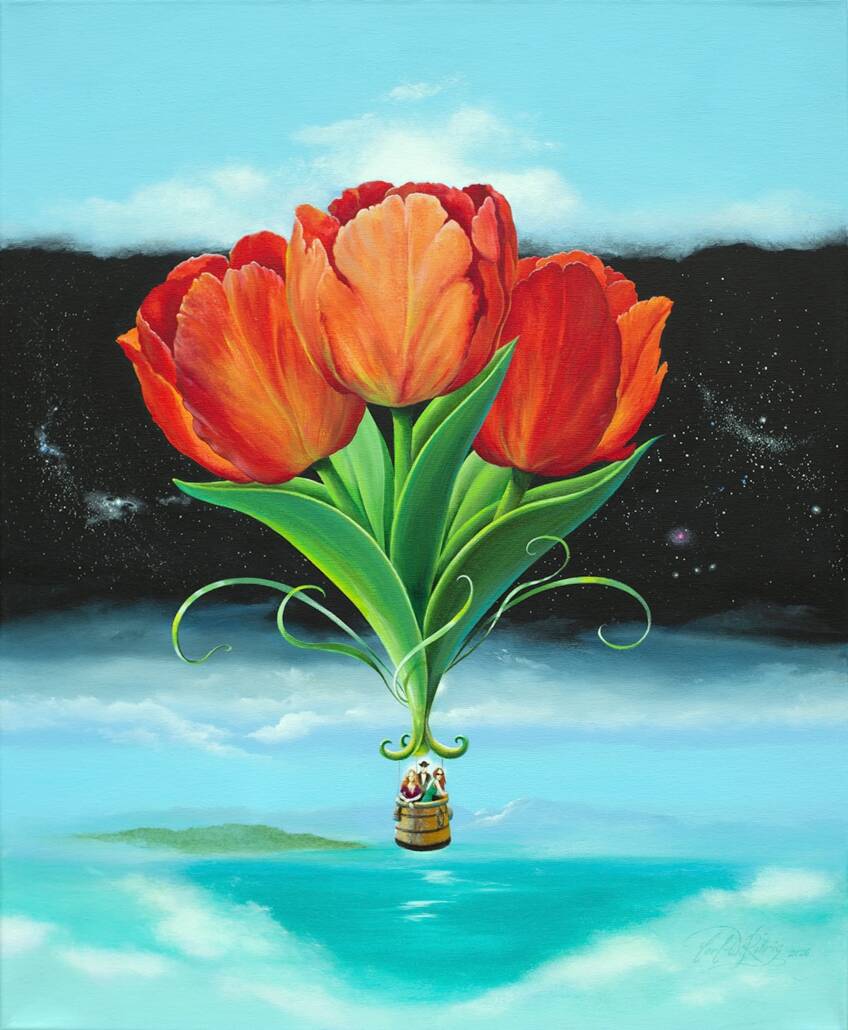
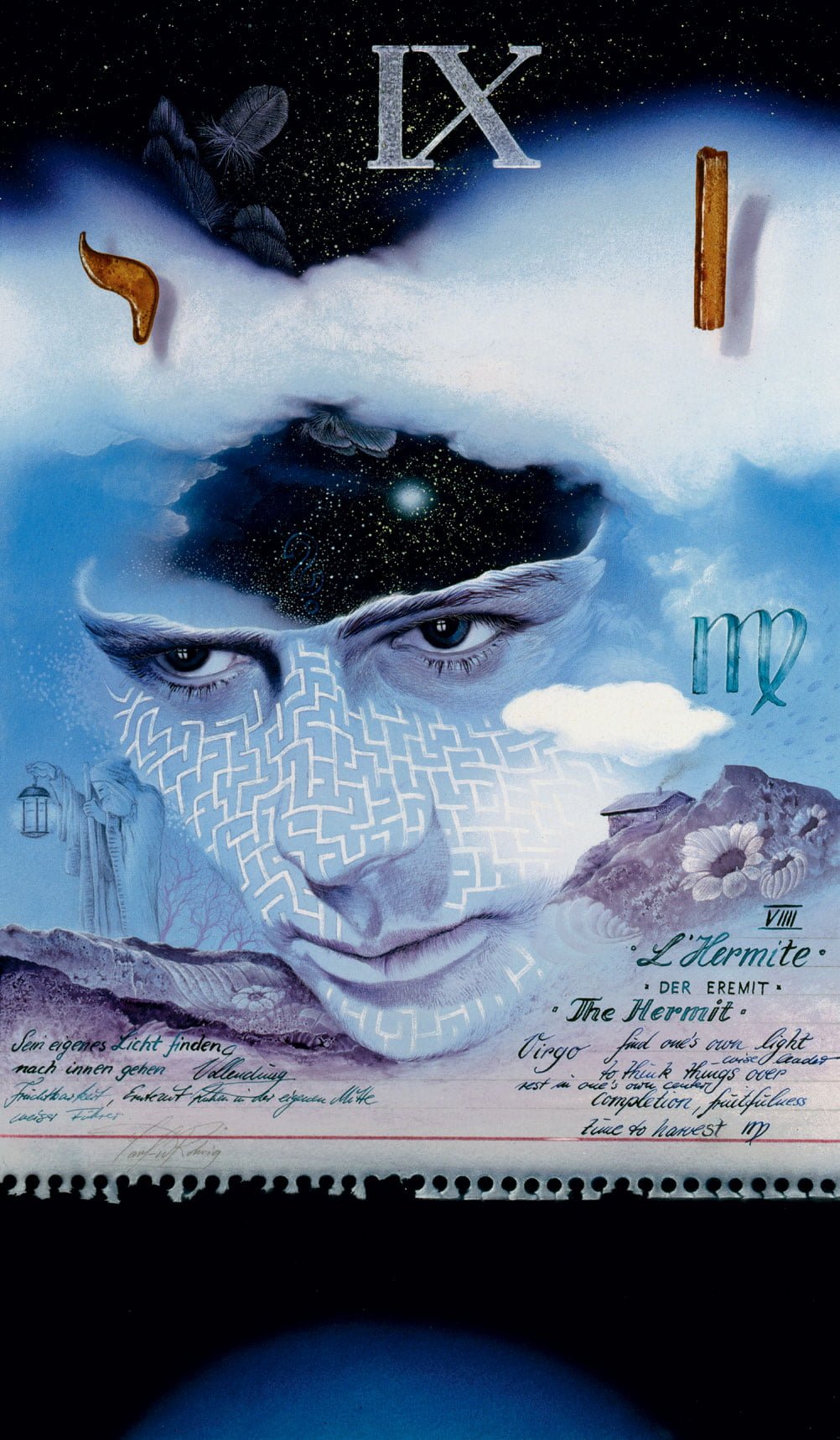
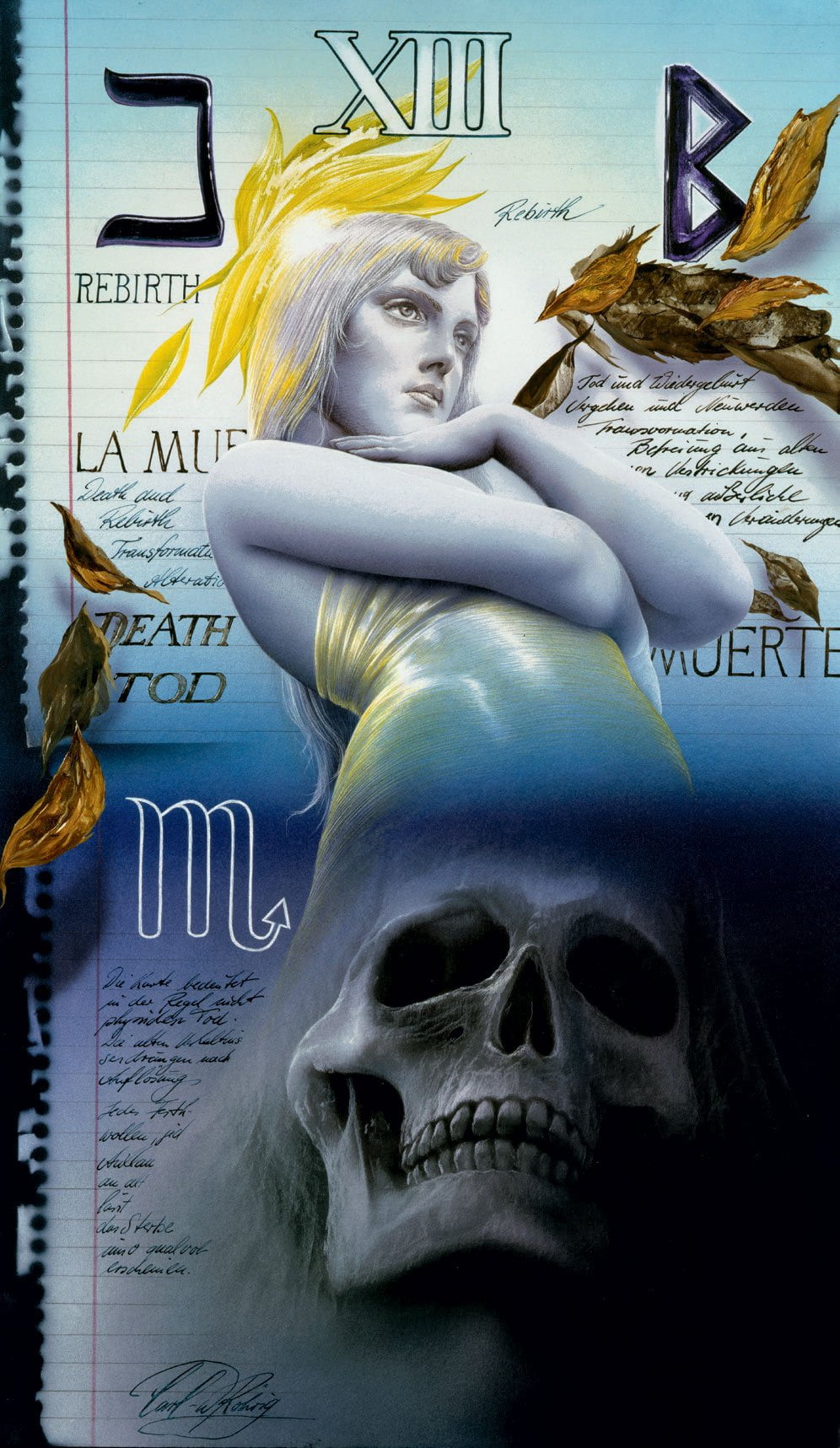
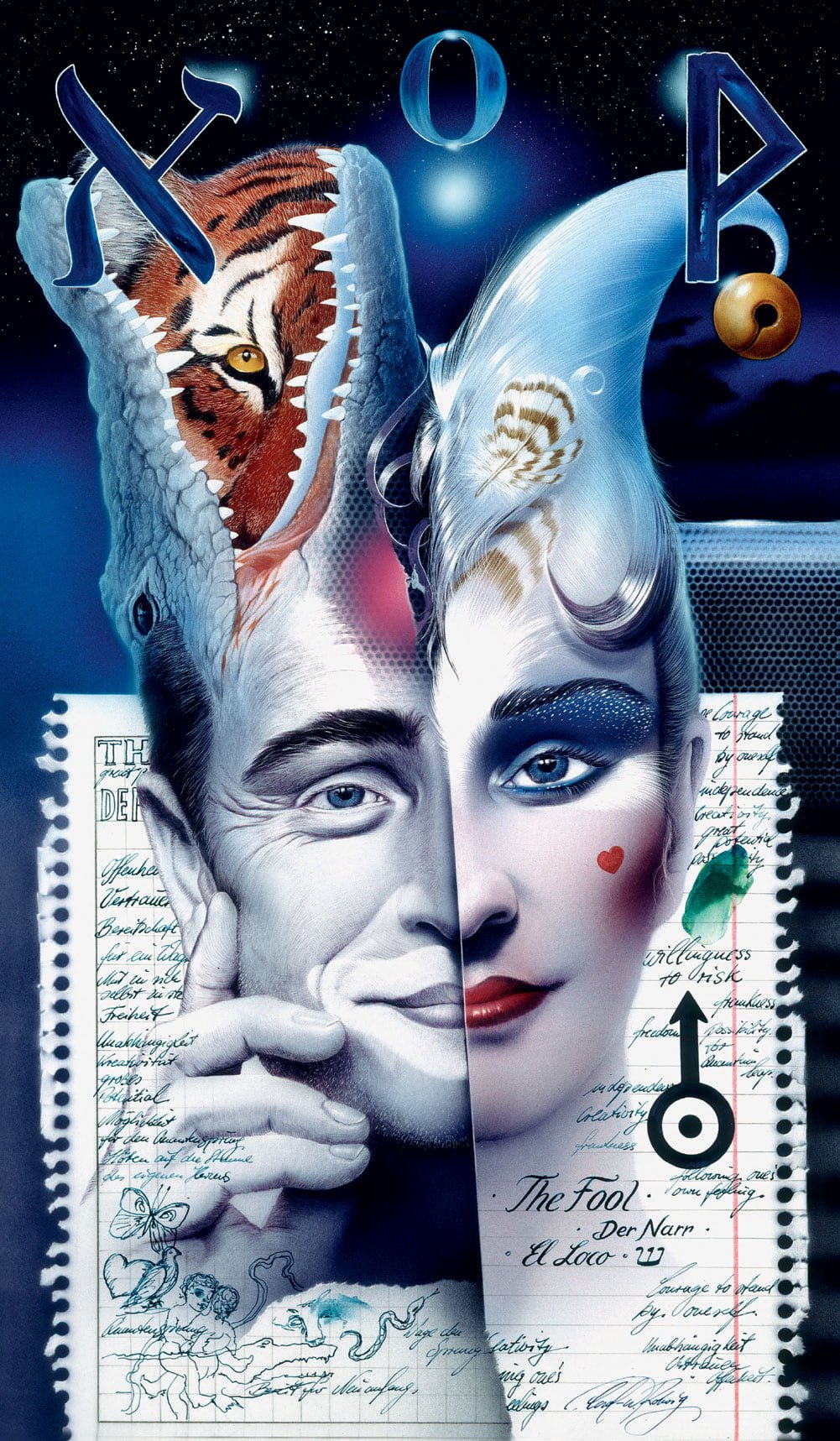
The Röhrig Tarot combines the traditional structure of tarot with the unmistakable visual language of Carl W. Röhrig. The cards are characterised by spatial depth, precise detail, intense colour and a complex interaction between human figures, natural forms, architecture, cosmic spaces and symbolic signs.
While many historical tarot decks rely on clearly separated figures and flat areas of colour, Carl W. Röhrig’s images open into atmospheric and multidimensional spaces. The eye moves through foreground, middle ground and background, continually discovering new details.
Tarot as an Artistic Cycle
In the Röhrig Tarot, the practical function of the card is only one aspect of the experience. Each image can also be viewed as an independent work of art. The cards appear like windows into larger visionary worlds and invite the viewer to spend time with every composition.
This approach connects tarot with Fantastic Naturalism. Nature is observed with precision but is not merely reproduced realistically. Plants, animals, bodies, landscapes and cosmic forms are transformed into carriers of inner and outer meaning.
Symbolism Through Detail and Transformation
The symbolism of the Röhrig Tarot does not always reveal itself immediately. Shapes merge into one another, bodies connect with landscapes and familiar motifs appear in unexpected contexts. Repeated observation can therefore reveal new interpretations and associations.
This openness is one of the deck’s distinctive strengths. The images do not simply present a fixed narrative. They stimulate personal associations. Light, colour, movement, direction of gaze and spatial relationships all become part of the interpretation.
Who Is the Röhrig Tarot Best For?
- Art lovers who appreciate detailed and visionary painting.
- Tarot readers who enjoy intuitive and sustained observation.
- Collectors of distinctive artist-created tarot decks.
- People interested in symbolism, nature and Fantastic Naturalism.
- Owners of other decks who want to add an independent modern visual world to their collection.
Is the Röhrig Tarot Suitable for Beginners?
The Röhrig Tarot can also appeal to beginners, particularly those who approach tarot through art and personal visual perception. Its abundance of detail requires attention. Readers seeking very clear everyday scenes and a particularly large range of instructional books may find the Rider-Waite-Smith Tarot easier at first.
Those who are prepared to observe the images openly and include their own perceptions may discover an especially powerful connection through the deck’s complexity.
Five Major Tarot Decks Compared
| Tarot Deck | Period | Visual Language | Symbolic Complexity | Beginner Friendly | Primary Strength |
|---|---|---|---|---|---|
| Visconti-Sforza | 15th century | Courtly, gilded, Renaissance-inspired | Medium | Partly | Historical and art-historical importance |
| Tarot de Marseille | Tradition established in the early modern period | Flat, clear and traditional | Medium to high | With guidance | Classical European tarot tradition |
| Rider-Waite-Smith | 1909 | Narrative and symbolic | Medium | Very suitable | Illustrated Minor Arcana and extensive learning resources |
| Thoth Tarot | 20th century | Visionary, geometric and esoteric | Very high | Partly | Astrological and kabbalistic depth |
| Röhrig Tarot | Modern artist-created tarot | Detailed, spatial and fantastic | High and visually open | Suitable for visually oriented beginners | Fantastic Naturalism and independent artistic vision |
Which Tarot Deck Is Best for Beginners?
For many beginners, the Rider-Waite-Smith Tarot is the easiest starting point. Its fully illustrated Minor Arcana present recognisable situations, and no other tarot system is supported by such a large selection of introductory books, courses and learning materials.
This does not mean that every beginner must start with this deck. A strong personal connection to the imagery is equally important. Someone who responds deeply to visionary painting and symbolic detail may find the Röhrig Tarot more intuitive than a traditional deck.
The Tarot de Marseille is suitable for beginners who enjoy numbers, basic symbols and historical structures. The Thoth Tarot may be appropriate for readers who already have a strong interest in astrology, Kabbalah or complex esoteric systems.
Before buying a deck, it is worth viewing several cards. Do not look only at famous Major Arcana images such as the Magician, Death or the Sun. Examine ordinary numbered cards from the Minor Arcana as well. These cards reveal how the deck may feel during regular use.
Which Tarot Deck Is Best for Collectors and Art Lovers?
Collectors often evaluate tarot cards according to different criteria than readers who use them mainly for interpretation. Historical importance, artistic originality, print quality, format, completeness and rarity may be just as important as practical readability.
The Visconti-Sforza Tarot has a particular appeal as a reproduction of an early Renaissance cycle. Historical Marseille editions document the development of European card printing. Rider-Waite-Smith and Thoth are among the most influential tarot systems of the 20th century.
The Röhrig Tarot is particularly interesting for collectors of modern artist-created decks. Its imagery is not merely a variation of established illustrations. It represents an independent painterly interpretation and can therefore be viewed both as a tarot deck and as a coherent artistic cycle.
Rider-Waite vs Thoth: What Is the Main Difference?
Rider-Waite versus Thoth is one of the most common comparisons in modern tarot. Both systems contain rich symbolism, but they speak very different visual languages.
The Rider-Waite-Smith Tarot generally presents recognisable scenes. Figures act, meet other people or find themselves in particular situations. This allows the card to be read as a narrative image.
The Thoth Tarot is more concerned with forces, movements and symbolic relationships. Its figures are often integrated into geometric or energetic compositions. Interpretation frequently requires more knowledge of astrological, alchemical and kabbalistic correspondences.
Readers who prefer visual storytelling usually find the Rider-Waite-Smith system more accessible. Those attracted to abstract symbolism and complex correspondences may feel more strongly drawn to the Thoth Tarot.
Tarot de Marseille vs Rider-Waite-Smith
The Tarot de Marseille encourages readers to pay attention to underlying structures. Number, suit, element, symmetry and card position are particularly important in the Minor Arcana. This can create a highly systematic yet intuitive reading method.
The Rider-Waite-Smith Tarot instead presents a specific scene on almost every card. It supports storytelling and immediate psychological interpretation. For this reason, it is the preferred foundation for many modern tarot teaching methods.
People interested in history and traditional woodcut-style imagery often choose the Tarot de Marseille. Readers seeking a more immediate connection through narrative scenes are more likely to prefer Rider-Waite-Smith.
Tarot as a Tool, a Work of Art or Both?
Tarot cards are often used as tools for reflection, meditation or interpretation. At the same time, they belong to a long European visual tradition. For centuries, their archetypes have inspired artists to explore social roles, stages of life, crises, hopes and transformations.
The boundary between functional object and work of art is therefore fluid. A simply printed historical deck may be culturally important because of its design. A modern artist-created tarot may interpret traditional motifs so independently that each card can be viewed as an individual artwork.
This artistic ambition is particularly visible in the Röhrig Tarot. The density of detail encourages slow observation. A card may first appear as a complete composition, then gradually reveal animals, plants, human forms, light sources and spatial transitions that open additional layers of meaning.
How to Choose the Right Tarot Deck
The choice should not be based on popularity alone. A deck that works well for many people may not necessarily suit your own perception or interests.
1. Decide How You Want to Use the Deck
Do you want to learn tarot systematically, explore images intuitively, collect historical cards or study a particular esoteric tradition? Your main purpose will immediately narrow the selection.
2. Examine Several Cards
Look at cards from both the Major and Minor Arcana. A deck may be fascinating in its famous archetypal cards but less inspiring in its numbered cards. For long-term use, the complete cycle should feel convincing.
3. Consider Visual Clarity
Very small symbols, dark printing or overcrowded compositions can make a deck difficult to use. With highly detailed artwork, the card format should be large enough for important elements to remain visible.
4. Check the Guidebook
Beginners benefit from a clear guidebook. With complex decks, it is helpful when the accompanying material explains the symbolism, card structure and differences from other systems.
5. Take Your Emotional Response Seriously
A tarot deck may be used for many years. Its images should therefore be more than intellectually interesting. They should create a personal response. Curiosity is often a better selection criterion than an abstract ranking of the best tarot decks.
Which Tarot Deck Matches Your Interests?
- For an accessible introduction: Rider-Waite-Smith Tarot.
- For traditional European tarot: Tarot de Marseille.
- For Renaissance art and collecting: Visconti-Sforza Tarot.
- For astrology and complex esoteric symbolism: Thoth Tarot.
- For visionary art and layered visual interpretation: Röhrig Tarot.
These recommendations are not fixed rules. A beginner may feel deeply connected to the Thoth Tarot, while an experienced reader may deliberately choose the clear structure of the Rider-Waite-Smith system. The decisive factor is the relationship between visual language, personal interest and preferred working method.
Conclusion: There Is No Single Best Tarot Deck for Everyone
The major tarot decks differ in much more than their illustration style. They represent different periods, philosophies and artistic concepts. The Visconti-Sforza Tarot preserves the splendour of the Renaissance. The Tarot de Marseille represents a long-established European visual tradition. The Rider-Waite-Smith Tarot made the Minor Arcana narrative and accessible. The Thoth Tarot combines visionary art with an exceptionally complex esoteric system.
The Röhrig Tarot continues the tradition of the artist-created tarot in an independent modern form. Its detailed imagery combines classical archetypes with nature, the human body, space, light and fantastic transformation. It therefore appeals not only to tarot readers but also to art lovers and collectors.
The right tarot deck is ultimately the one whose images encourage prolonged observation. A good deck does not simply provide fixed answers. It opens spaces of perception, stimulates questions and reveals new connections through repeated exploration.
Discover the Röhrig Tarot
Discover the tarot cards of Carl W. Röhrig and experience how traditional archetypes are combined with Fantastic Naturalism, spatial depth and an extraordinary symbolic world.
Frequently Asked Questions About Tarot Decks
Which tarot deck is best for beginners?
The Rider-Waite-Smith Tarot is widely considered beginner-friendly because of its fully illustrated Minor Arcana and the large amount of available learning material. However, the most important factor is whether the visual language of the deck creates a personal connection.
How many cards are in a complete tarot deck?
A traditional complete tarot deck contains 78 cards. It consists of 22 Major Arcana cards and 56 Minor Arcana cards.
What is the difference between Rider-Waite and Thoth Tarot?
The Rider-Waite-Smith Tarot generally uses clear and recognisable narrative scenes. The Thoth Tarot has a more complex and partly abstract visual language, with extensive astrological, kabbalistic and alchemical correspondences.
Is the Tarot de Marseille suitable for beginners?
Beginners can learn with the Tarot de Marseille, but it usually requires more attention to numbers, elements and traditional symbols. The numbered Minor Arcana cards generally do not contain the narrative scenes found in the Rider-Waite-Smith Tarot.
What makes the Röhrig Tarot special?
The Röhrig Tarot combines traditional tarot archetypes with the detailed, spatial and visionary visual language of Carl W. Röhrig. The cards can be used for tarot readings while also being appreciated as an independent artistic cycle.
Can I use more than one tarot deck?
Yes. Many readers use different decks for different subjects, moods or methods. A clear and accessible deck may be used for learning, while a complex artist-created tarot may support deeper visual exploration.
Were historical tarot cards originally created for divination?
The earliest surviving tarot cards were originally created as playing cards. Their connection with esoteric interpretation and divination developed during later centuries.
What should I consider when buying a tarot deck?
Important factors include appealing artwork, print quality, a suitable card size, useful accompanying material and whether the imagery of both the Major and Minor Arcana fits your preferred reading style.